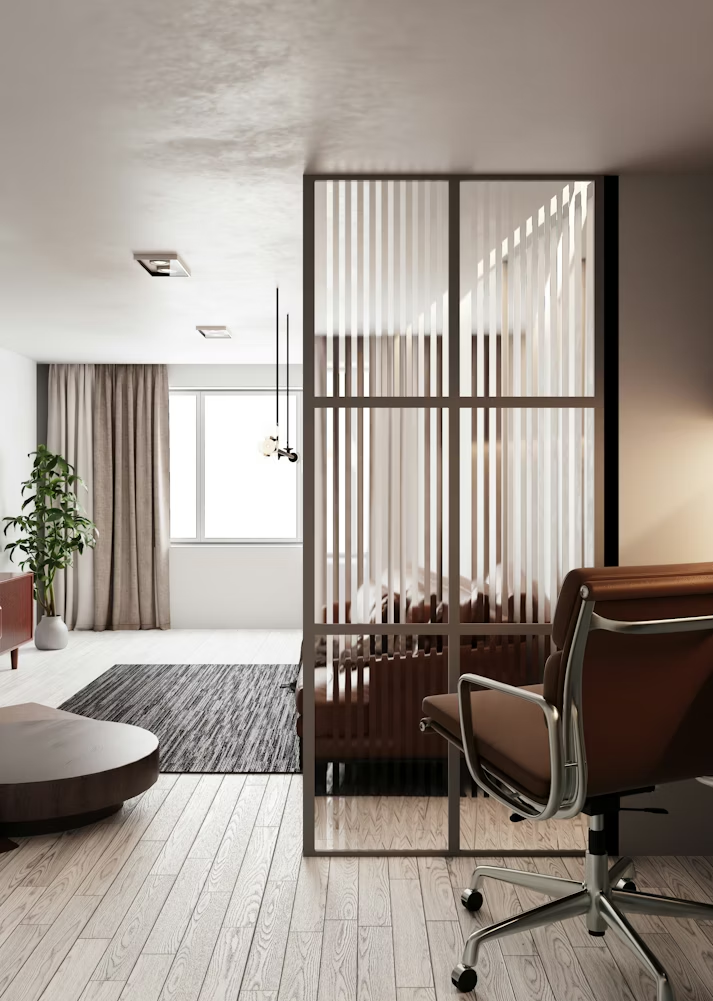
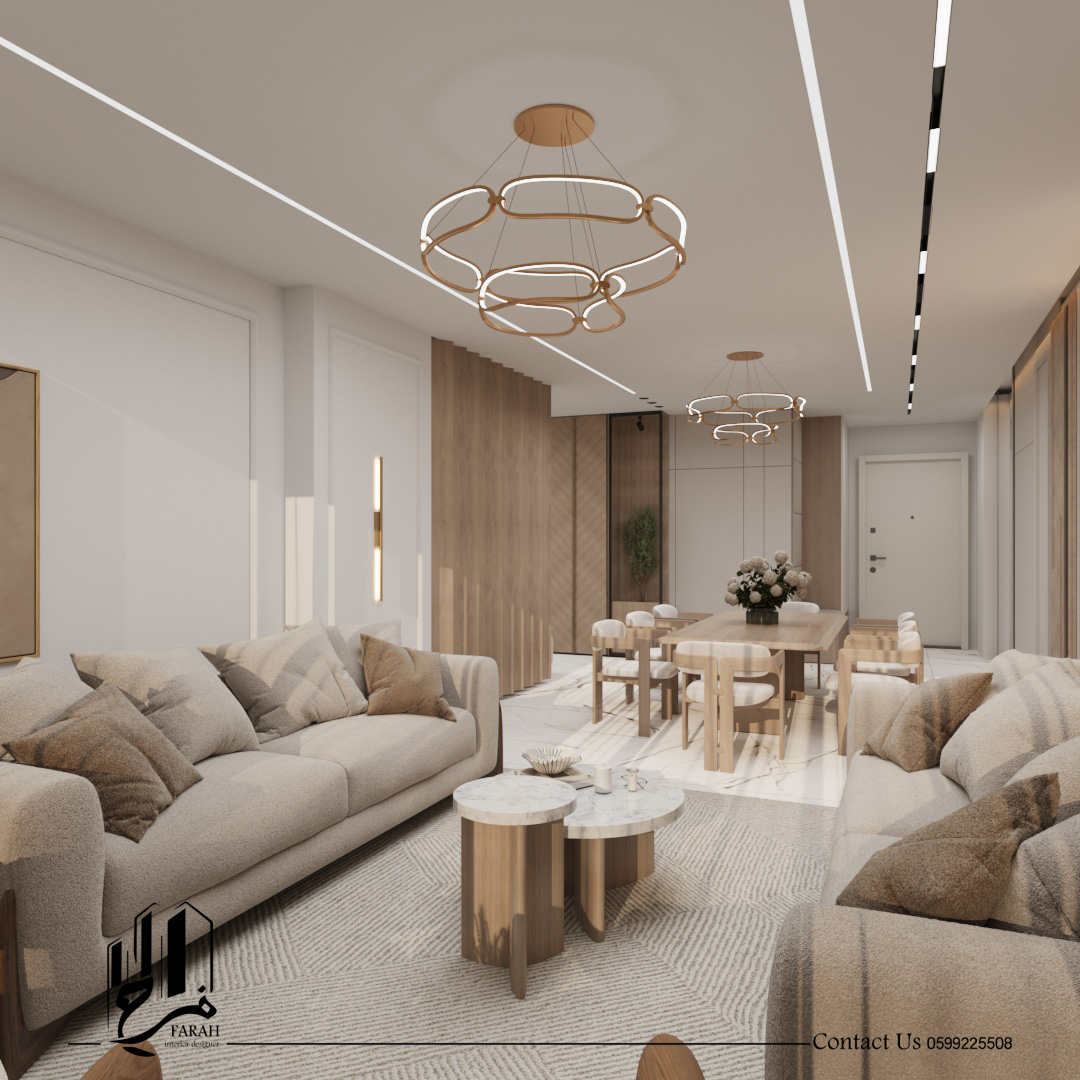
Privacy is one of the most important elements homeowners look for, especially in designs that rely on open spaces. In some projects, the real challenge is finding the right balance: how to maintain the flow and openness of the space while also giving the residents a sense of privacy and comfort. This was the focus of the project, approached through thoughtful and simple design solutions.
Understanding the Challenge
In this project, open spaces were an important feature in maintaining the sense of spaciousness, but there was also a clear need to separate the family’s private daily life from the guest reception area.
The Design Principle
Instead of relying on complete closure or harsh division, the design adopted solutions that achieved visual and functional separation in a soft way, allowing the space to remain open and connected without being fully exposed.
Tools Used to Create Privacy
The internal layout, movement paths, and positioning of spaces were all handled carefully to create a sense of privacy without sacrificing openness. Details and dividing elements also played an important role in organizing the relationship between the different zones within the home.
Preserving the Sense of Spaciousness
Privacy here did not come at the expense of visual comfort. A calm design language, clear circulation, and a balance between openness and separation were maintained, allowing the home to remain comfortable, elegant, and practical at the same time.
Conclusion
Privacy does not necessarily mean enclosure, just as open spaces do not mean the absence of separation between functions. When a project is approached with a good understanding of lifestyle and the needs of its residents, it is possible to achieve a successful and beautiful balance between privacy and openness.