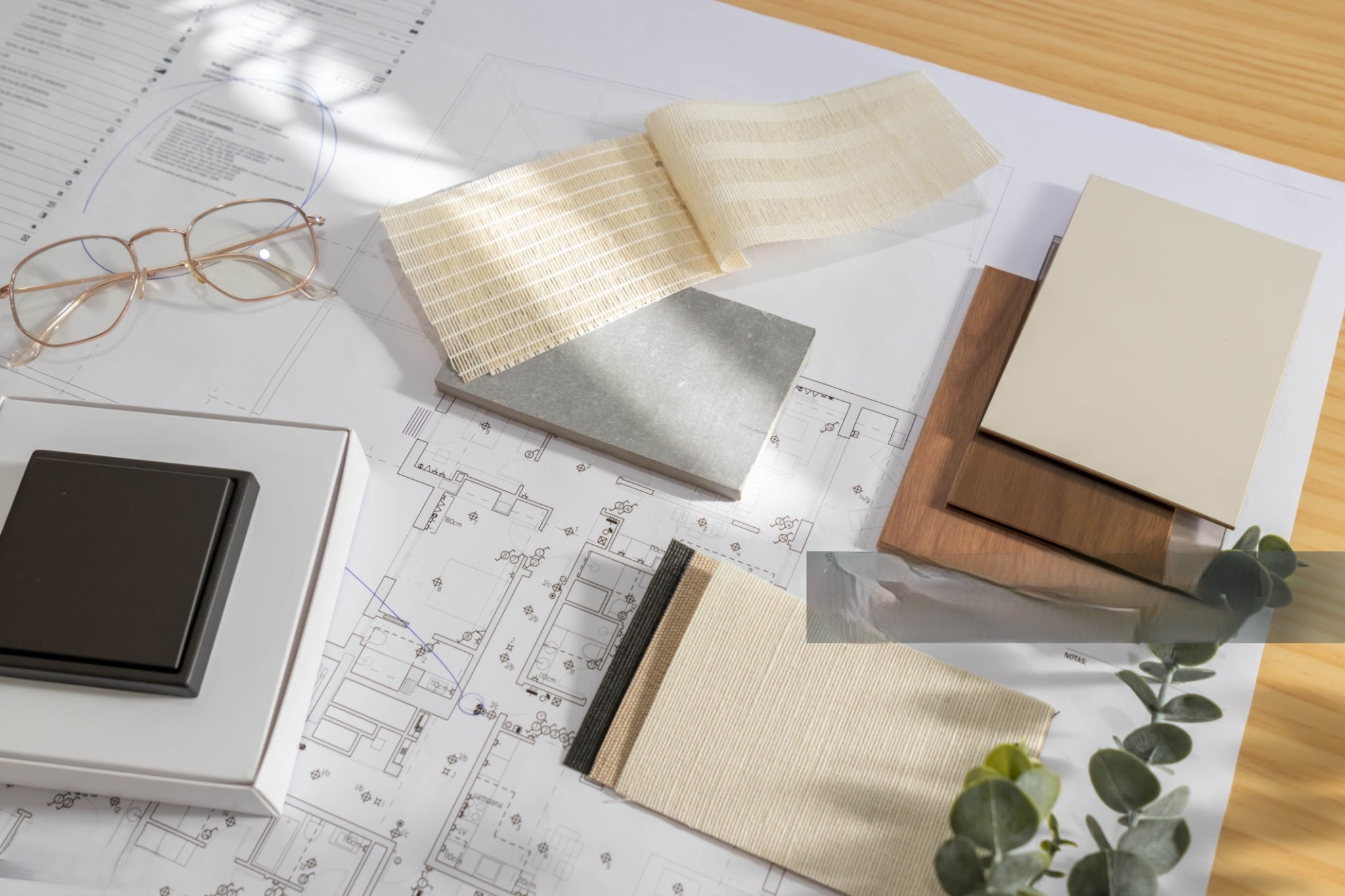
Many people confuse interior design with execution and think of them as one single step, while in reality each phase has a different and essential role. Design is the stage where the idea is developed and the details of the space are defined, while execution is the process of turning that vision into a built reality. Understanding this difference helps clients make clearer decisions and gives the project a stronger foundation from the start.
What Is Interior Design?
Interior design is the stage in which the space is studied, the client’s needs and lifestyle or business nature are analyzed, and all of that is translated into a complete visual and functional concept. This includes space planning, material and color selection, furniture planning, and developing an overall vision that reflects the identity of the place.
What Does Execution Include?
Execution is the phase that begins after the design has been approved, where all the agreed details are implemented on site. It includes finishing works, carpentry, gypsum work, lighting, flooring, paint, and the installation of various elements according to the drawings and specifications prepared in advance.
Why Is Execution Alone Not Enough?
Starting execution without a clear design often leads to random decisions, wasted time and budget, and an unbalanced final result. A well-prepared design gives the project clarity, makes execution more precise and smoother, and reduces unexpected changes during the work.
The Relationship Between Design and Execution
Design and execution are not completely separate phases, but two complementary parts of the same process. The more thoughtful and clear the design is, the better the execution will be. And the more accurate and committed the execution is to the drawings, the more the quality of the design will appear in the final result.
Conclusion
The success of any interior project does not depend only on the beauty of the idea, nor only on the quality of execution, but on the balance between both. Design gives the project its vision, and execution gives it life. When both move in harmony, the result is a balanced, practical space that clearly reflects its owners.